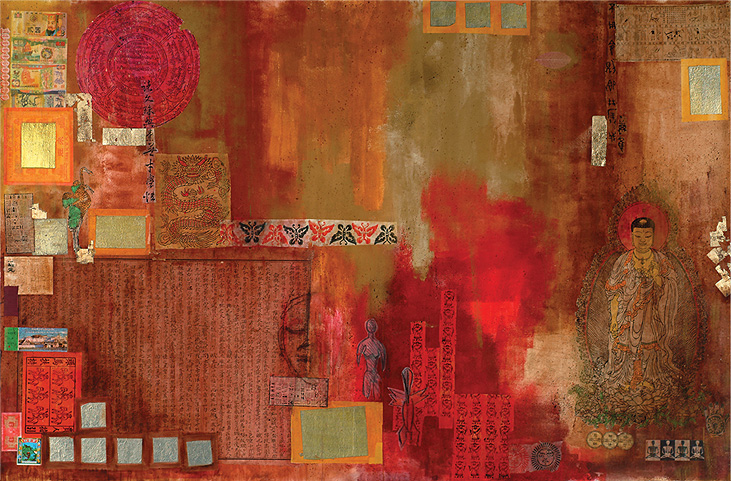
ORIENT #3
The largest painting in the series, and probably the most personal, is to some extent organised according to the principles of Feng Shui. It is also the only painting that makes reference to the time that the artist spent seeking to unravel the “mysteries of the East”. During his years spent in Japan studying martial arts he frequented Zen monasteries and delved into the discipline of Zen. In Tibet, he sought out lamas and monks and researched the foundations of Tibetan Buddhism. On his frequent trips to Nepal his pilgrimages led him deep into the hinterlands where he was awed by the simplicity of a pure and ancient culture, untouched. His various Himalayan expeditions over the years, and the association with the lamas he met, induced him to shave his head and take refuge in a monastery, where he sought the way to incorporate these principals into his work and daily life. In earlier years his practise of yoga led to extensive travels throughout India, he met with mystics
and yogis, sadhus, sinners and saints. This wealth of experience serves as the image bank repeatedly tapped
into in this series.
Spirit guardians guide us around the canvas as Buddha emerges from the shadows half into the light, against a dissolving skyline obscured by the mists of unanswered prayers.
Significantly, this last piece in the series heralds a changing current towards a more subjective and automatic drawing from a wellspring of the artist’s own personal iconography charged with private meaning, ambiguity and spirituality. Pointing to the fact that every end contains a new beginning.
|